Overview
As one of the first employees of Sparx Hockey, I was a primary contributor to the core technology, the Sparx Skate Sharpener. I was responsible for developing patented technology, designing and prototyping innovative ideas, and bringing our product to manufacturing. While I was with Sparx we grew from five people in a small office to supplying a revolutionary skate sharpening experience to more than half the NHL, hockey shops, and thousands of domestic and international consumers.
The Mission
As a hockey player, one of the most irritating and confusing aspects of the sport is maintaining quality skate blade edges. Specialty stores are often far away, while the shop at the rink has a half hour line at best. Once you get your skates to the store, sharpening hockey skates manually is part technical, part art form, leaving customers with inconsistent edges and frustration on the ice.
Sparx was founded with the mission to cut through the fog of maintaining hockey skates by bringing innovative new technology to the hockey world. At the heart of this is the Sparx Skate Sharpener, the first automated skate sharpener meant for home use. The product that we designed to help hockey families became so popular, and proved so reliable, that today it is used by professional NHL teams, top-tier college program, and clubs all across the US and Canada.
Development

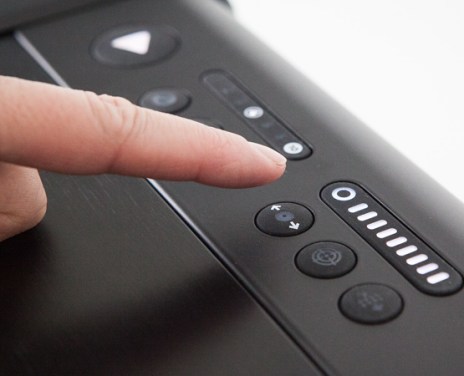
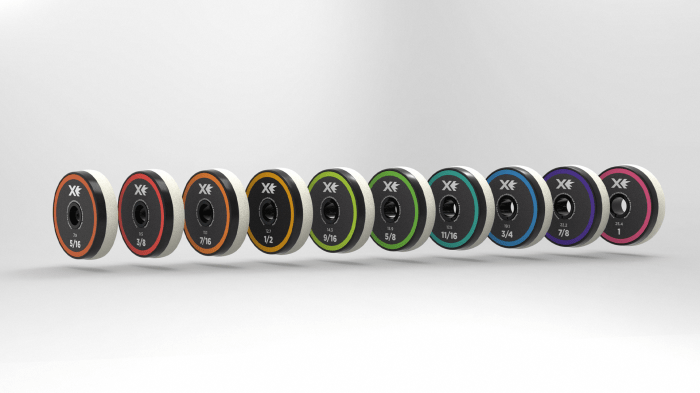
The Sparx Skate Sharpener takes the complex process of manual skate sharpening and turns it into a plug-and-play operation. The system works by placing a skate into the self-centering clamps, selecting the number of sharpening passes needed depending on the blade condition, and pressing the start button. Users can change the feel and performance of their blade edges by choosing from an array of grinding wheel options. Players can tune control against speed to match their playing style.

We knew that even though this three-step procedure would be the go-to for most users, some would want more customization and control. To address this we designed the machine to be adjustable, easily calibrated, intuitive, and safe. Users can adjust settings like contact point on the blade, and grinding wheel offset. A calibration tool makes re-centering the grinding wheel to within one one-thousandth of an inch a turn of a knob. Lighted keypad and internal status lights give easy to understand cues about the sharpener. Numerous safety features, and an on-board air filtration system, allow for worry free operation even around inexperienced users or young children.
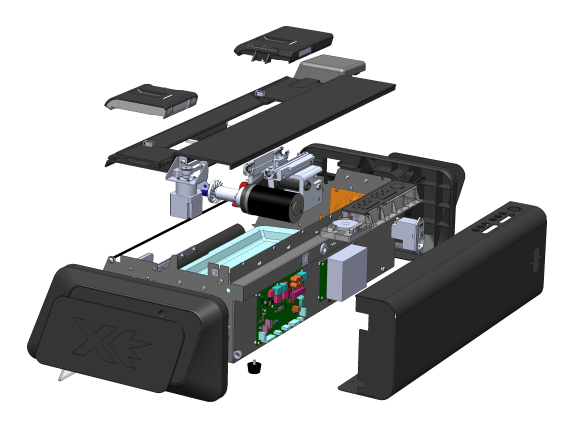
I was an integral part of our team of three engineers tasked with researching, designing, testing, and leading the manufacturing of the Sparx sharpener. I had to work independently and efficiently, while making decisions that would directly impact the company and consumers.
I was required to be able to work through all stages of the design process: brainstorming and concept generation, fast early prototyping and design iteration, finished quality prototyping, and design for manufacturing and assembly. I designed parts using my knowledge in machining, injection molding, casting, ultrasonic welding, sheet metal bending, extruding, electronics manufacturing, and finishing.
Manufacturing
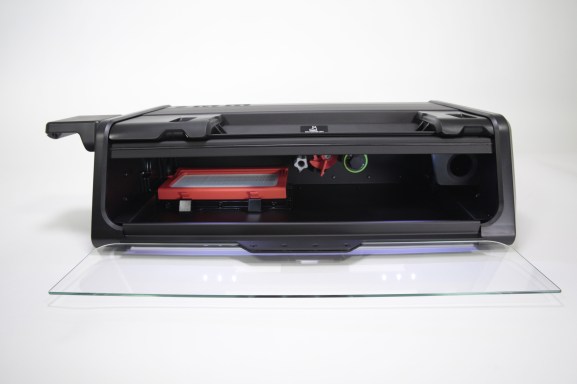
To produce the Sparx sharpener, we partnered with a manufacturing house with a proven track record making high-end home automation products. During the manufacturing process we coordinated to identify reliable suppliers, adjust design decisions to improve production, and used their experience to select materials and processes that were cost effective while maintaining the premium quality product we had set out to create.

Working with our partner in Malaysia required me to be on site for a large portion of the initial manufacturing setup and first customer-ready builds. I was responsible for the success of the manufacturing process as a whole including:
- Ensuring parts were made as designed, and if that wasn’t feasible, adjusting designs while reducing the impact to other components, schedule, and cost
- Developing calibration and testing procedures for critical components, and verifying that processes were able to be reliably completed by site engineers and line operators
- Researching manufacturing methods to improve part functionality and ease of assembly
- Identifying and establishing new supplier opportunities
- Working with international suppliers to reduce costs while maintaining quality, and pushing to hit deliverable deadlines
Life at Sparx
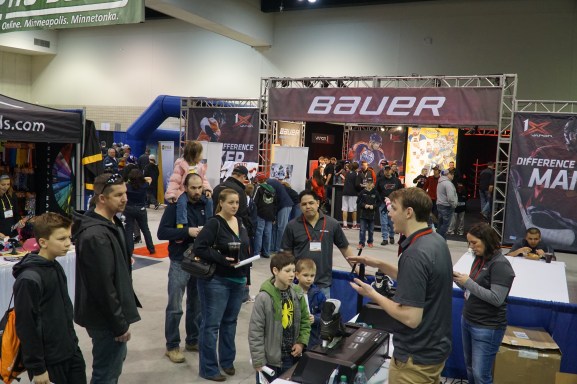
Being part of such a small startup at the early stages was both challenging and extremely rewarding. While my title was mechanical engineer, as a core member of the company I was a part of shaping our company identity and ensuring our company’s success. I provided insights towards our branding and marketing material, sold some of our first units at the world’s largest consumer hockey show, and spent weekends travelling around the Boston area to demonstrate our system, all in the name of revolutionizing the hockey world.
 Matt Hanczor